Active 2.4 GHz · Beacon Tags & Readers

Active RFID Hardware
2.4 GHz Beacon Tags, Readers and What They Deliver

Active RFID tags carry their own battery and beacon on a fixed interval, so a reader hears them across a yard, a plant floor or an assembly point rather than only at a doorway. This page covers the 2.4 GHz category end to end: how active differs from passive UHF, what the spec lines on a beacon tag mean (form factor, beacon interval, battery, sealing), how multi-antenna readers set coverage, and the difference between presence, proximity and coordinate positioning. Figures come from published datasheets and from the European and US rules for the 2,400–2,483.5 MHz band.
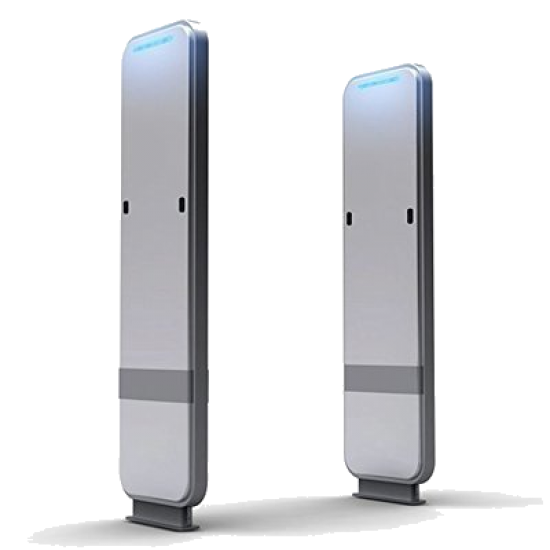
Active RFID Hardware: 2.4 GHz Readers, Beacon Tags and What They Deliver
Operating band
2,400–2,483.5 MHz
The 2.4 GHz ISM band; Europe caps RF output at 20 dBm (100 mW) e.i.r.p. under ETSI EN 300 328 V2.2.2 (2019-07)
Working range
Up to 100 m typical
Up to 100 m typical, 400 m line-of-sight, confirmed by site survey; every published active range carries a qualifier such as open field or antenna type
Tag battery life
Set by beacon interval
One published CR2450 tag is rated 3 years at a 3 s beacon and 7 years at a 10 s beacon
20 dBmmaximum mean e.i.r.p. for 2.4 GHz wideband data equipment in Europe (ETSI EN 300 328 V2.2.2, 2019-07)
1 Wpeak conducted output for digitally modulated systems in 2,400–2,483.5 MHz in the US (47 CFR 15.247)
IP67tag sealing class: enclosure immersed with its lowest point 1 m down for 30 minutes (IEC 60529)
3location tiers: presence, proximity and positioning; positioning needs uniform locator coverage across the area (RTLS practice)

Active versus passive: what the battery changes

Both are RFID, but they answer different questions. A passive tag is identified when it crosses a reader’s field; an active tag announces itself on a schedule, so the system knows its zone for as long as a reader can hear it.

radio

The tag transmits on its own schedule

An active tag wakes, sends a short burst — a beacon or blink — and sleeps again, repeating at a set interval. Published tags beacon anywhere from every 0.5 s to every 10 s, and the interval is a configuration choice that trades update rate against battery life. A passive tag replies only while a reader’s field powers it; see UHF RFID tags for that side.

waves

A different band and a different rulebook

Active tags and readers work in the 2,400–2,483.5 MHz ISM band. Passive UHF sits lower: 865–868 MHz in India under G.S.R. 853(E) of 10 December 2021, at 2 W e.r.p. on four 200 kHz channels centred at 865.7, 866.3, 866.9 and 867.5 MHz (mirroring the ETSI lower band), and 902–928 MHz in the US. The two families use separate readers; frequency bands by country maps the UHF side.

ruler

Range comes from the tag’s own transmitter

A passive tag must harvest energy from the reader before it can answer, which is why one passive UHF ID card is published at up to 9 m with a matched reader. An active tag powers its own radio, so working distance depends on tag transmit power, reader sensitivity, antenna pattern and the site itself. The active line Identium supplies is quoted at up to 100 m typical, 400 m line-of-sight, confirmed by site survey.

calendar-clock

A service life to plan around

The battery that buys range also sets a replacement cycle. Our card and puck tags are rated at 3 years; published tags elsewhere run from 3 to 7 years depending on cell and beacon interval. Budget tag replacement like any consumable and keep spares for new joiners and vehicles.

git-branch

Which one fits the job

Choose active when people, vehicles or mobile assets move across large areas and you need their current zone. Choose passive when many items cross a few choke points such as dock doors or conveyors. Many sites run both; the RFID hardware hub compares every family, and active vs passive RFID walks through the decision.

Beacon tags: form factor, beacon interval and battery

Four lines on an active-tag datasheet decide whether it suits the job: how it is worn or mounted, how often it beacons, how long the battery is rated for and under what conditions, and how well the housing is sealed.

id-card

Card tags for people

A personnel tag has to be worn all shift without a second thought. Our card tag is a 4.5 mm clamshell with a moulded lanyard slot, so it hangs directly from a lanyard; it beacons every 500 ms, is rated for 3 years and is sealed to IP67. Visitors and short-stay staff can carry passive credentials from RFID cards or RFID wristbands alongside.

disc

Puck tags for assets and vehicles

Asset tags trade wearability for mounting options. Our puck tag beacons once a second, is rated for 3 years, is sealed to IP67 and operates from −20 to +45 °C; it fixes with screw eyelets or a 3M VHB pad. The table shows other published formats, from adhesive-back tags to lug-mounted IP68 beacons.

timer

Beacon interval is the battery dial

Each beacon costs energy, so interval and battery life move together. One published CR2450 tag is rated 3 years at a 3-second beacon and 7 years at 10 seconds, and every vendor attaches conditions. Ask for every battery figure with its interval, transmit power and temperature attached.

battery

Cell capacity sets the life class

Coin cells keep tags thin; larger cells buy years. A lug-mounted beacon on two CR2477 cells (2,000 mAh in total) is rated 5 years at a 0.5 s interval and 0 dBm, and an indoor location beacon lists 3 years on a 2,900 mAh AA pack and 6 years on 5,400 mAh.

shield

Sealing and temperature

IP67 means the enclosure survived immersion with its lowest point 1 m below the surface for 30 minutes (IEC 60529); IP68 depth is set by the manufacturer. Published active tags span IP65 to IP68 and operating ranges from −20 to +45 °C up to −35 to +85 °C. Match the rated range to where the tag actually sits, including sun-exposed mounts.

Published active-tag figures by class (sources below); battery life applies at the stated conditions and “—” = not stated. Our line’s system range: up to 100 m typical, 400 m line-of-sight, confirmed by site survey.
ClassForm factor & mountingPower sourceBeacon intervalRated battery lifeRange as publishedSealing & temperature
Personnel card tag (our line)4.5 mm clamshell with moulded lanyard slotBuilt-in battery500 ms3 yearsSee captionIP67
Asset puck tag (our line)Puck; screw eyelets or 3M VHB padBuilt-in battery1 s3 yearsSee captionIP67; −20 to +45 °C
Adhesive-back asset tag45 × 40 × 12.2 mm ABS, 3M adhesive backCR2450, non-replaceable3 s / 10 s3 years / 7 yearsUp to 60 m (open field)−20 to +60 °C
LED badge / asset tag86 × 35 × 22 mmAA high-temperature lithium, replaceable1.5 s at 0 dBm, 25 °C5 years10 cm to 80 m, depending on reader and environmentIP65; −35 to +85 °C
Indoor location beaconAA battery pack2,900 mAh / 5,400 mAh—3 years / 6 years——
Lug-mounted rugged beacon82 × 64 × 21 mm, 43 g2 × CR2477, 1,000 mAh each0.5 s at 0 dBm5 years150 m sight distanceIP68; −20 to +70 °C

Active readers: antennas, sensitivity and backhaul

An active reader is a receiver first: it hears beacons from its own zone and passes each detection to software over whatever link the site offers.

radio-tower

Several antennas in one enclosure

The reader Identium supplies houses four antennas in one enclosure, usable for omnidirectional or directional coverage, with 12 dBi dual-polarised gain and an IP65 housing. One unit can watch a gate in one direction and the surrounding area at the same time. Other published readers take two external antennas on SMA or optional N connectors.

compass

Omnidirectional or directional

Omni coverage suits a room, a muster point or a yard; directional coverage suits a gate, corridor or lane where you want a defined approach. Pattern changes range: one published reader is rated up to 20 m with an omni antenna and up to 80 m with a directional one. See RFID antennas and antenna gain units for dBi and beam-width.

sliders-horizontal

Receive sensitivity sets the zone edge

Sensitivity is the weakest beacon the reader will accept. One published reader steps it in 32 one-dB increments, from −94 to −63 dBm at 250 kbps or −82 to −51 dBm at 2 Mbps. Turning it down shrinks the zone, which is how adjacent zones are kept apart.

network

Backhaul: Ethernet, Wi-Fi or 4G

Readers report detections over the network. Published units offer USB, Ethernet with optional PoE, and Wi-Fi; the reader Identium supplies connects over TCP/IP and 4G, which suits yards and sites where running cable to every pole is impractical. Published units add opto-isolated inputs and relay outputs to drive a barrier or beacon light.

cloud-rain

Enclosure and mounting

IP65 means dust-tight and protected against water jets from a 6.3 mm nozzle at 12.5 L/min and 30 kPa from 3 m (IEC 60529). Published active readers run from −20 to +70 °C in aluminium cases. Confirm each mounting position, antenna direction and sensitivity setting during the site survey.

Presence, proximity and positioning: what a deployment delivers

What a detection tells you depends on how readers are laid out. RTLS practice separates three tiers, and naming the one you need is the most useful line in an active RFID specification.

door-open

Presence

A reader acts as a gate and answers one question: is this person, vehicle or asset here? Presence suits entrances, assembly points and yard gates, and needs the fewest readers.

layout-grid

Proximity

Readers at building entrances, aisle crossings and choke points divide a site into zones, and the software reports which zone last heard each tag and when. Reader density is placed where it is needed rather than uniformly. This is the tier the active line Identium supplies is built for, with each zone defined by the readers covering it.

crosshair

Positioning

Positioning computes X-Y coordinates from physical properties of the radio link — time of flight, time difference of arrival (TDOA) or angle of arrival, as ISO/IEC 24730-1 lists — and needs uniform locator coverage across the whole area. Specify it explicitly when coordinates, rather than zones, are the requirement.

refresh-cw

Update rate: within seconds

Freshness is beacon interval plus reader reporting plus the software’s presence window. With tags beaconing every 500 ms or every second, zone changes reach the dashboard within seconds; at a muster point the presence window keeps a person on the roll call through a brief step out of range.

map-pin

Range language that survives a site survey

Every published active range carries a qualifier: open field, sight distance, antenna type, or reader and environment. Read those figures as ceilings. The working distance for the line Identium supplies is up to 100 m typical, 400 m line-of-sight, confirmed by site survey, and reader counts are fixed after that survey. See the active reader tracking system for the platform view.

Where active RFID earns its place

Active hardware pays back where the tagged population is people, vehicles or a few hundred valuable mobile assets, and where knowing the current zone matters more than counting items at a door.

users

Personnel presence and mustering

Staff wear card tags, and readers at assembly points build a live roll call: the roster checked against everyone heard at a muster point, with everyone still outstanding listed on one board for the wardens in place of paper lists. See the mustering and evacuation system.

truck

Vehicles and yards

Puck tags on trucks, forklifts and yard equipment, mounted inside the cab or on a shaded bracket within the tag’s −20 to +45 °C range, are read by directional antennas at gates and omni coverage across the yard, with 4G backhaul for open ground. Pair them with vehicle and parking management or logistics and supply chain workflows.

package

High-value mobile assets

Tool carts, test equipment, containers and medical devices that move between rooms suit a puck tag and proximity coverage: dwell time per zone, movement history and an alert when an asset enters a zone outside its route. Asset management covers the register side.

building-2

Campuses and restricted areas

Reader zones at building entrances and restricted rooms turn tag beacons into entry and exit events by zone and time, giving security and operations teams one record of who and what was in each area. Passive gates stay the tool for item-level counts at the same doors; see fixed UHF RFID readers.

Regulation, standards and how to specify

Active RFID radios work in the 2.4 GHz ISM band, each destination market sets its own conformity route, and the system is bought as a matched set of tags, readers and software.

globe

Europe: EN 300 328

ETSI EN 300 328 V2.2.2 (2019-07) is the harmonised standard for data equipment in 2,400–2,483.5 MHz. It limits RF output power, defined as mean e.i.r.p. during a transmission burst, to 20 dBm for both frequency-hopping and other equipment, and it is the usual route to CE marking for 2.4 GHz readers and tags.

flag

United States: FCC Part 15

Section 15.247 covers operation in 902–928, 2,400–2,483.5 and 5,725–5,850 MHz and allows up to 1 W peak conducted output for digitally modulated systems. The reader Identium supplies carries FCC and CE marking; list every destination market in the RFQ, and see export certification by market.

file-text

Air interface and location methods

ISO/IEC 24730-1 sets out the application interface for real-time locating systems and lists the location techniques — time of flight, TDOA and angle of arrival. Active systems commonly run the tag and reader vendor’s own air protocol — one published reader operates in the 2.4–2.5 GHz band with its own protocol — so specify tags and readers as a matched set.

list-checks

Choose in three passes

First, name the tier: presence, proximity or positioning. Second, pick the tag by wear or mounting, beacon interval and battery target. Third, survey the site to place readers, choose omni or directional coverage and set sensitivity per zone. The reader selection guide covers the passive side of mixed sites.

ship

Supply, software and export

Identium writes its tracking software in-house in New Delhi, supplies active readers and tags as matched sets, and quotes in USD on EXW, FOB, CIF or DDP terms for worldwide export. Hardware can also be ordered through our online store.

What to Put in the Enquiry

Paste these lines into your RFQ and the quotation comes back comparable across suppliers.

  1. Location tier required: [presence at gates / proximity by zone / coordinate positioning], with a site drawing marking zones, gates and assembly points.
  2. Tag population and form factor: [n] personnel card tags worn on lanyards; [n] asset or vehicle puck tags, mounting [screw eyelets / adhesive pad].
  3. Beacon interval and rated battery life for each tag type, stating the transmit power and temperature at which the life figure is quoted.
  4. Sealing and operating temperature for tags and readers (e.g. tags IP67, readers IP65), with the mounting locations they must survive.
  5. Reader antenna configuration: [omni / directional / both], antennas per enclosure, gain in dBi and polarisation; receive-sensitivity adjustment range.
  6. Range statement as a typical working distance plus a line-of-sight maximum, confirmed by a site survey before the reader count is fixed.
  7. Backhaul and power per reader: [Ethernet / 4G / Wi-Fi], supply [DC voltage / PoE], GPIO for barriers or beacon lights.
  8. Radio conformity for each destination market: [CE via ETSI EN 300 328 / FCC Part 15 Section 15.247 / other].
  9. Software output: zone entry and exit events, last-heard zone and time per tag, API or webhook format, roll-call export for muster zones.
  10. Commercials: USD quote, Incoterm [EXW / FOB / CIF / DDP], tag spares ratio and replacement cycle.

Active RFID Hardware, Answered

How far can an active RFID reader hear a tag?

It depends on tag transmit power, reader sensitivity, antenna pattern and what stands between them, which is why every published figure carries a qualifier such as open field or sight distance. One published reader is rated up to 20 m with an omnidirectional antenna and up to 80 m with a directional one. For the line Identium supplies, plan on up to 100 m typical, 400 m line-of-sight, confirmed by site survey.

How long do active tag batteries last?

Our card and puck tags are rated at 3 years. Across the market, battery life is always quoted at a stated beacon interval, transmit power and temperature: one published CR2450 tag is rated 3 years at a 3-second beacon and 7 years at 10 seconds. Plan tag replacement on the rated cycle and hold spares.

Will active RFID show exactly where someone is?

A proximity layout, with readers covering defined zones, reports which zone last heard each tag and when, which covers presence at gates, assembly-point roll calls and dwell time by area. Positioning uses time-of-flight, TDOA or angle-of-arrival techniques with uniform locator coverage across the area, and is specified as its own infrastructure tier.

How quickly does a zone change show up?

Within seconds. The card tag beacons every 500 ms and the puck tag every second; reader reporting and the software’s presence window add to that, and a slower beacon trades freshness for battery life.

Which radio rules apply to 2.4 GHz active hardware?

In Europe the harmonised standard is ETSI EN 300 328 V2.2.2 (2019-07), with a 20 dBm e.i.r.p. limit, leading to CE marking; in the US, Section 15.247 of FCC Part 15 covers 2,400–2,483.5 MHz with up to 1 W peak conducted output. The reader Identium supplies carries FCC and CE marking. Name your destination markets in the RFQ so the documentation matches.

Card tag or puck tag?

Use the card tag for people: a 4.5 mm clamshell that hangs from a lanyard through its moulded slot and beacons every 500 ms. Use the puck tag for assets and vehicles: it fixes with screw eyelets or a 3M VHB pad and is rated −20 to +45 °C, so mount it where it stays within that range. Both are sealed to IP67 and rated for 3 years.

Can active and passive RFID run on the same site?

Yes, and many sites do. Active tags at 2.4 GHz track people, vehicles and mobile assets by zone, while passive UHF tags on 865–868 MHz in India and the ETSI lower band, or 902–928 MHz in the US, count items at doors and conveyors. The two use separate readers and can feed the same software.

Specify it once, quote it anywhere.

Tell us the destination country and the read point — we return the band variant, the antenna plan and a USD quotation with the conformity documents listed.